


Search engine optimisation for financial services
Financial services is one of the hardest places on the internet to get noticed. Banks, insurers, brokers, lenders and comparison sites all want the same searches, the big ones have enormous budgets, and Google holds every page about money to a higher standard than almost anything else it ranks.
That is the environment financial SEO has to work in. We run finance sites of our own, and this page is how we approach it.
What is Financial SEO?
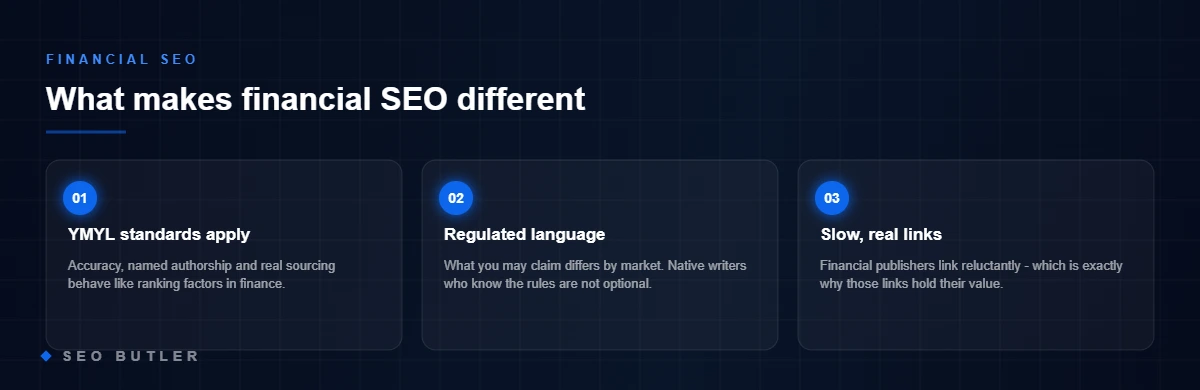
Financial SEO is search engine optimisation for companies that deal with money: banks, lenders, insurers, investment platforms, fintechs, advisers and the sites that compare them. The goal is the usual one, higher rankings and more organic traffic for the terms that bring in customers. The constraints are not usual at all, because financial content is regulated and because Google treats it as a “your money or your life” topic, which means it looks hard at who wrote a page and whether they can be trusted.
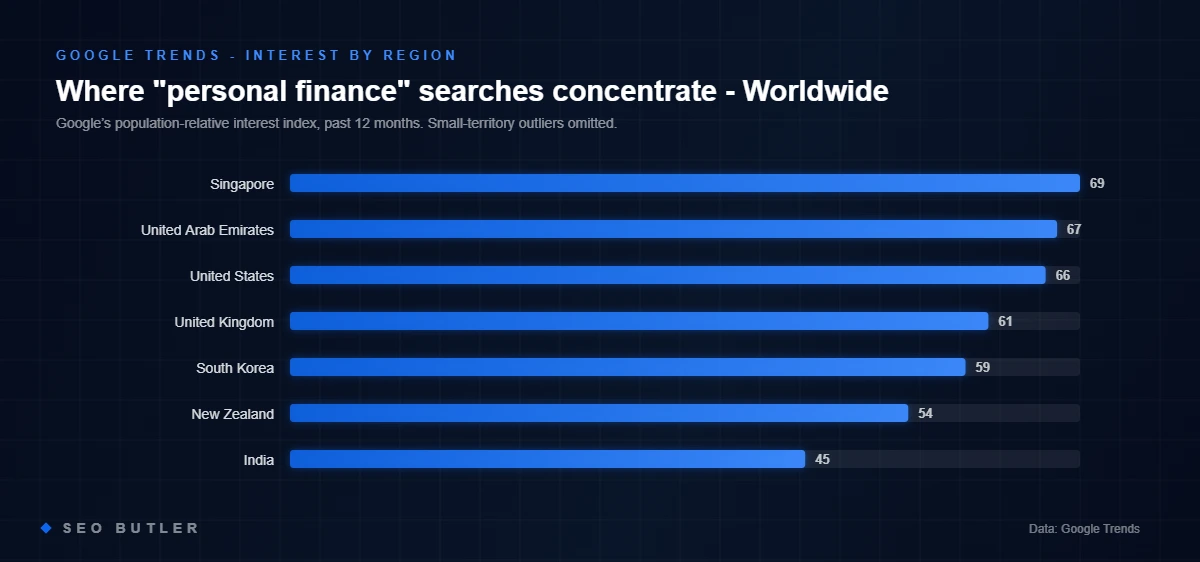
It is also a broad field. A mortgage lender, a crypto exchange and a pet insurer share almost no keywords and almost no audience, so a financial SEO plan has to be built for the product in front of it rather than for “finance” in general.
Finance E-E-A-T scorecard: would Google trust this page with money advice?
Finance is the hardest YMYL vertical: every core update re-asks whether your site deserves to influence financial decisions. Tick what is true of your money pages today and see where the exposure is.
High risk
Fix these first
Educational self-assessment only — not financial or legal advice, and no scorecard substitutes for a quality-rater-guidelines read. Weightings reflect what we see move finance sites through core updates.
Benefits of improving SEO for financial services
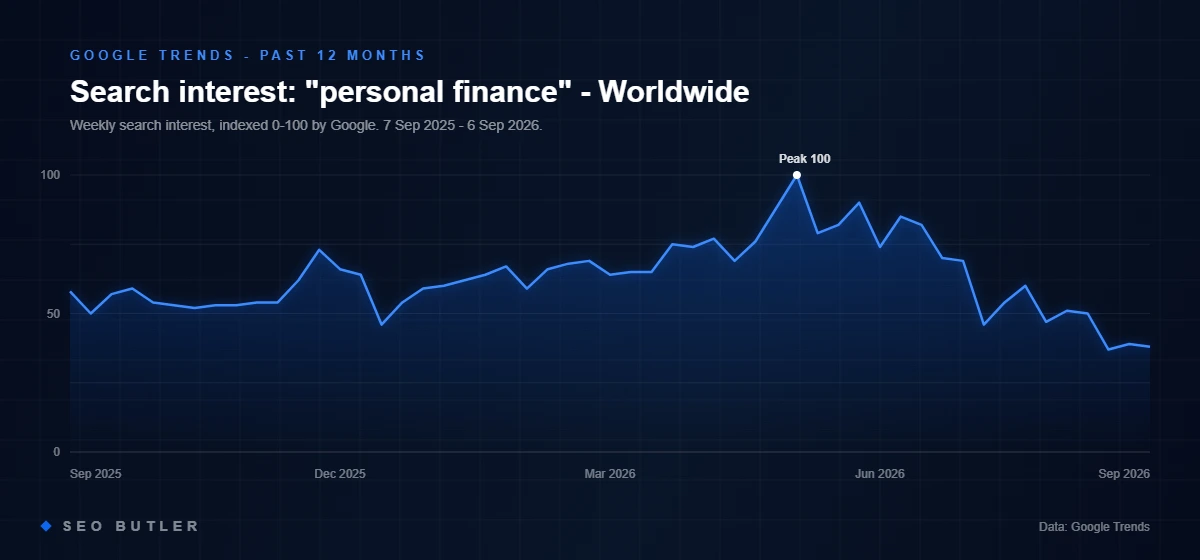
The obvious one is traffic you do not pay for per click, from people who were already looking for a loan, a policy or an account. Beyond that, ranking well makes a financial brand look established, which in this sector is worth money on its own, and it lowers the cost of acquiring each customer as the rankings hold. Paid search in finance is some of the most expensive there is; every customer who arrives organically is one you did not have to bid for.
Where SEO Butler fits into Financial SEO
Finance is one of the verticals we know best. We understand what a financial site is allowed to say, what Google expects to see on a page about money, and where the traffic in this sector actually comes from, because we have built and ranked finance sites ourselves.
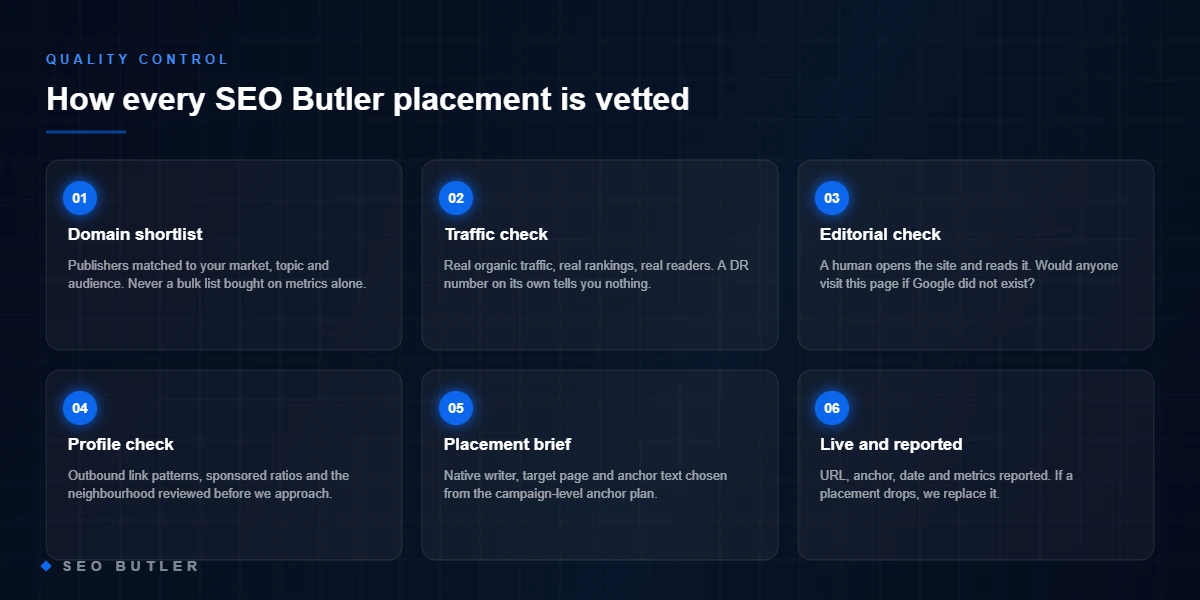
We are not an agency that runs your SEO. What we offer is help procuring placements on real finance and business sites through our backlink marketplace, and content written to the standard finance demands, for your own pages or for the articles that carry a placement.
The rest of this page, the keyword research, the technical clean-up, the link building and the measuring, is how we do it for our own sites. It is here because the same standards decide which publishers we list and how our writers work.
The main challenges in Financial SEO
Regulation comes first. Financial promotions are controlled in most countries, which limits content creation and rules out the kind of claims other industries make freely. Competition comes second: the big institutions and the comparison sites hold the head terms, and a smaller firm is not going to take “car insurance” off them by trying harder.
Then there is the language. Financial products are complicated, and pages that are technically correct but full of jargon lose readers before the second paragraph. Getting the balance right, precise enough to be trusted and plain enough to be read, is a skill in itself. Trust is the currency here, and the site has to earn it on every page.
Google also keeps moving the goalposts, and its updates hit finance harder than most sectors, so a plan needs somebody watching it. And because so much has already been written about every financial product, saying something useful that is not already on a hundred other sites takes real thought.
How to build customer trust
Start with clarity. Say what your products cost, what the fees are and what the conditions are, in language a customer can follow without a glossary. People trust firms that do not make them hunt for the catch. Real reviews and client feedback help too, because prospective customers believe other customers more than they believe you.
Security matters more in finance than anywhere else. HTTPS across the whole site, visible security and regulatory information, and a site that looks and behaves like it belongs to a serious company all reassure people who are about to hand over their financial details. A cluttered or dated site does the opposite, however good the product is.
Then give people something useful. Guides that answer the questions customers actually ask, written by people who know the subject, show that you understand it, and that is what both readers and Google are looking for. Keep the branding consistent wherever the company appears, and answer enquiries quickly. Small things, but customers notice them.
None of this happens overnight. Trust in financial services is built slowly and lost quickly, and the sites that keep earning it are the ones that keep customers for years.
9 Financial SEO tips we use on our own sites
Here are the nine things we do on a financial site. None of them is secret. The difference is doing all of them properly.
Check your current SEO
Before anything else, find out where you stand. Google Search Console and your analytics will show which pages bring traffic, which keywords you already rank for and where visitors leave. Look at the on-page side and the off-page SEO side together, because the fix is usually in one or the other.
Perform a content audit
Go through every page and ask whether it is accurate, whether it is still relevant and whether it has a keyword it is trying to rank for. Out-of-date financial content is a liability, not just dead weight, so update it or remove it. What is left should each have a clear job.
Do keyword research
Work out what your customers type when they need your product, then be realistic about which of those terms you can win. Long-tail queries, the specific questions about a product or situation, are usually where a financial site gets its first traffic, and the people asking them are often close to a decision.
Make a competitor analysis
The sites ranking above you have already shown what works in your niche. Look at their keywords, the content they publish, where their links come from and how their sites are structured. The gaps you find are the plan.
Create educational content for your users
Guides, explainers, calculators and honest comparisons are what make a financial site an authority. Write about the problems your customers actually have, answer the questions properly, and keep the content current. It brings traffic on its own and it earns links from the kind of sites you want.
Optimise the technical aspects of your website
Technical SEO keeps the site crawlable and clean: sensible URLs, HTTPS, no broken links, no duplicate pages, proper metadata, structured data where it helps, and a fast server. Financial sites accumulate technical debt quickly, and it quietly holds everything else back.
Focus on speed and mobile optimisation
Most people compare financial products on a phone. If the site is slow or awkward on mobile they leave, and Google, which ranks the mobile version of your site, sees them leave. PageSpeed Insights will tell you what is slowing things down. Fix it, and make sure every form, calculator and application flow works on a small screen.
Consider local SEO
If you serve a particular city or region, local search is worth the effort. A well-kept Google Business Profile, consistent local listings and a steady flow of real reviews put you in front of people nearby who are looking for exactly what you offer.
Track and improve your off-page SEO
Off-page SEO is everything that points at your site from elsewhere: links, mentions, reviews and social presence. Keep an eye on your backlink profile, get rid of anything that looks spammy, and buy links only from real finance and business publishers. It is the part of SEO that most decides whether Google trusts a financial site, and it is the part where our marketplace can help.
Summary
Financial SEO is a long game played under stricter rules than most. Understand the regulation, be honest about which keywords you can win, publish content that actually helps people, keep the site fast and clean, and build links from sites that mean something. Do that consistently and the traffic, the trust and the customers follow.
The links and the content are the two parts we can do for you. The rest of this list is yours, and it is worth doing.
Browse the backlink marketplace to see the finance publishers in your market, or tell us what you’re targeting if you have a question first.

How SEO Butler fits in
SEO Butler is a backlink marketplace and content studio based in Malta. We run technical SEO, on-page SEO, content creation, off-page SEO and link building on a portfolio of websites of our own across nine markets, which is where the advice on this page comes from. If you need links, the backlink marketplace is where you procure placements on established sites, priced before you order, with the articles written by native speakers. The search engine optimisation page shows how the pieces fit together.
Read about the six SEO services as we practise them, see the markets we build links in, or tell us what you are trying to rank.